
Having an asbestos survey carried out is an important first step, but it can also leave you scratching your head and wondering what happens next. You’ve got a report, a collection of sample results and perhaps a few terms you’re not entirely sure how to interpret. So, what are you expected to do with all of this information?
For duty holders, building owners and anyone buying a property, the answer depends on what the asbestos survey has found. Under the Control of Asbestos Regulations 2012, asbestos-containing materials need to be identified, assessed and managed appropriately.
How does an asbestos survey reach its conclusions?
During an asbestos inspection in the UK, a competent surveyor will inspect the relevant areas and, where appropriate, take samples of materials suspected of containing asbestos. Those samples are sent to a laboratory for asbestos testing. The laboratory results are then included within the survey report, giving you confirmation of whether the sampled material contains asbestos.
You may also see the terms “presumed” or “strongly presumed” in your report. These are used where a material could not be sampled or there was insufficient evidence to confirm its composition. In these circumstances, it should be treated as containing asbestos until there is evidence to show otherwise.
Your report should tell you:
- What materials were identified
- Whether they contain asbestos, or are presumed to
- Where they are located
- Their condition
- What action, if any, is recommended
As you’ve probably guessed, that last bit is very important!
What happens after an asbestos survey?
There are four typical outcomes following an asbestos survey. The right action will depend on the material, its condition, its location and the likelihood of it being disturbed.
- No action is required
If laboratory analysis confirms that a sampled material does not contain asbestos, there may be nothing further to do with that particular material. It’s worth keeping the laboratory certificate and survey report with your property records, though. They provide useful evidence for future maintenance, refurbishment or building work.
- Manage and re-inspect the asbestos
Finding asbestos doesn’t automatically mean it needs to be removed. If an asbestos-containing material is in good condition, isn’t likely to be disturbed and can be safely managed in place, removal may not be necessary. Instead, it should be recorded within the asbestos register and monitored as part of the asbestos management plan.
An asbestos re-inspection is commonly carried out around every 12 months, although the appropriate frequency should reflect the condition and risk of the material. This is an important distinction: asbestos can remain in a building safely when it is properly managed.
- Encapsulate the asbestos
If an asbestos-containing material has suffered a small amount of damage, encapsulation may be an option. This involves sealing or protecting the affected material so that asbestos fibres are less likely to be released. The appropriate solution depends on the material and the extent of the damage. The asbestos register and management plan should then be updated to reflect the action taken and any ongoing monitoring required.
- Remove the asbestos
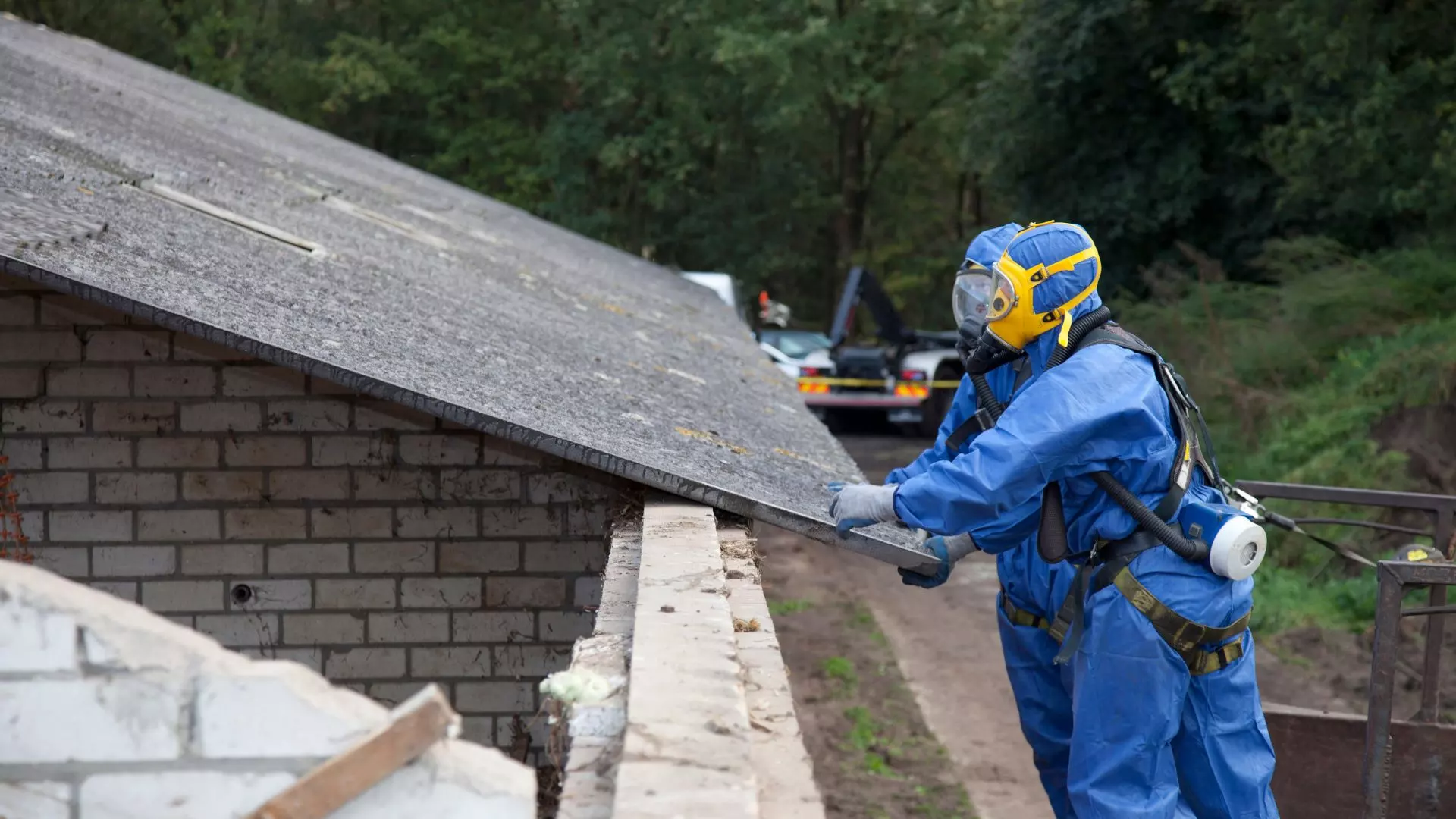
Where asbestos is badly damaged, presents a higher risk or will be disturbed by planned work, removal may be recommended. Some higher-risk materials and activities require work to be carried out by a licensed asbestos contractor. Asbestos insulation board is a common example where specialist controls may be required.
Depending on the work involved, notification to the HSE may also be required before work begins. Licensed asbestos work has specific notification requirements, so this should be established before any removal starts.
What else needs to happen after an asbestos inspection?
It’s important not to just file away the report and forget about it altogether. Known asbestos-containing materials should be recorded in the asbestos register, alongside information about their location and condition. This information needs to be kept up to date as the condition of materials or use of the building changes.
You should also make sure relevant information is available to contractors and workers who could disturb asbestos. Emergency services should also have appropriate information about known asbestos locations and their condition – you can take a look at our guide on why and how to do this here.
When is an asbestos survey required?
As a general rule, asbestos needs to be considered in buildings constructed or refurbished before 2000, as asbestos may be present. A survey may be required to identify materials that could be disturbed during normal occupation, maintenance or planned works. If you’re planning refurbishment or demolition, the requirements change because a more intrusive survey may be needed before work starts.
However, that doesn’t mean you need to commission a brand-new management survey every year simply for the sake of it. For example, if an existing management survey has covered the relevant areas and confirmed there is no asbestos, there may be no reason for an annual re-inspection. Asbestos isn’t going to suddenly appear where it wasn’t previously present. A new survey may become necessary if circumstances change, areas weren’t previously accessible or there is reason to believe something was missed.
Buying a building with an existing asbestos survey?
Buying a property with an existing asbestos survey can save you time and expense, but it’s worth doing your homework before relying on it. Start by checking who carried out the survey, what areas were covered, when it was completed and whether the surveying organisation has appropriate competence and UKAS accreditation where applicable. Look at the scope of the accreditation rather than simply taking a logo at face value.
Most importantly, remember that responsibility for managing asbestos sits with the current duty holder. If you purchase a building, that responsibility transfers to you. If a previous survey missed asbestos, you can’t simply assume that the previous owner remains responsible for the consequences. If you’re unsure whether an existing survey is sufficiently reliable, commissioning your own assessment can provide greater confidence before you take on the property and its risks.
What should you do when your asbestos survey arrives?
- Check each finding and identify whether it requires no action, management and re-inspection, encapsulation or removal.
- Update your asbestos register and management arrangements.
- Arrange remedial work where required, using an appropriately competent or licensed contractor.
- Make sure any required HSE notification is dealt with before licensed work begins.
- Plan regular condition checks for asbestos left in situ.
- If refurbishment or demolition is planned, check whether a more intrusive survey is required.
Final thoughts
A good asbestos survey shouldn’t leave you wondering what to do next. It should give you information that can be acted on, helping you manage the building safely and make sensible decisions about future work.
At RM Risk Management, we provide asbestos surveys with reports designed to give duty holders useful, actionable information about asbestos-containing materials, their condition and what needs to happen next.
Get in touch with our team to discuss your requirements and get a no-obligation quote.
