
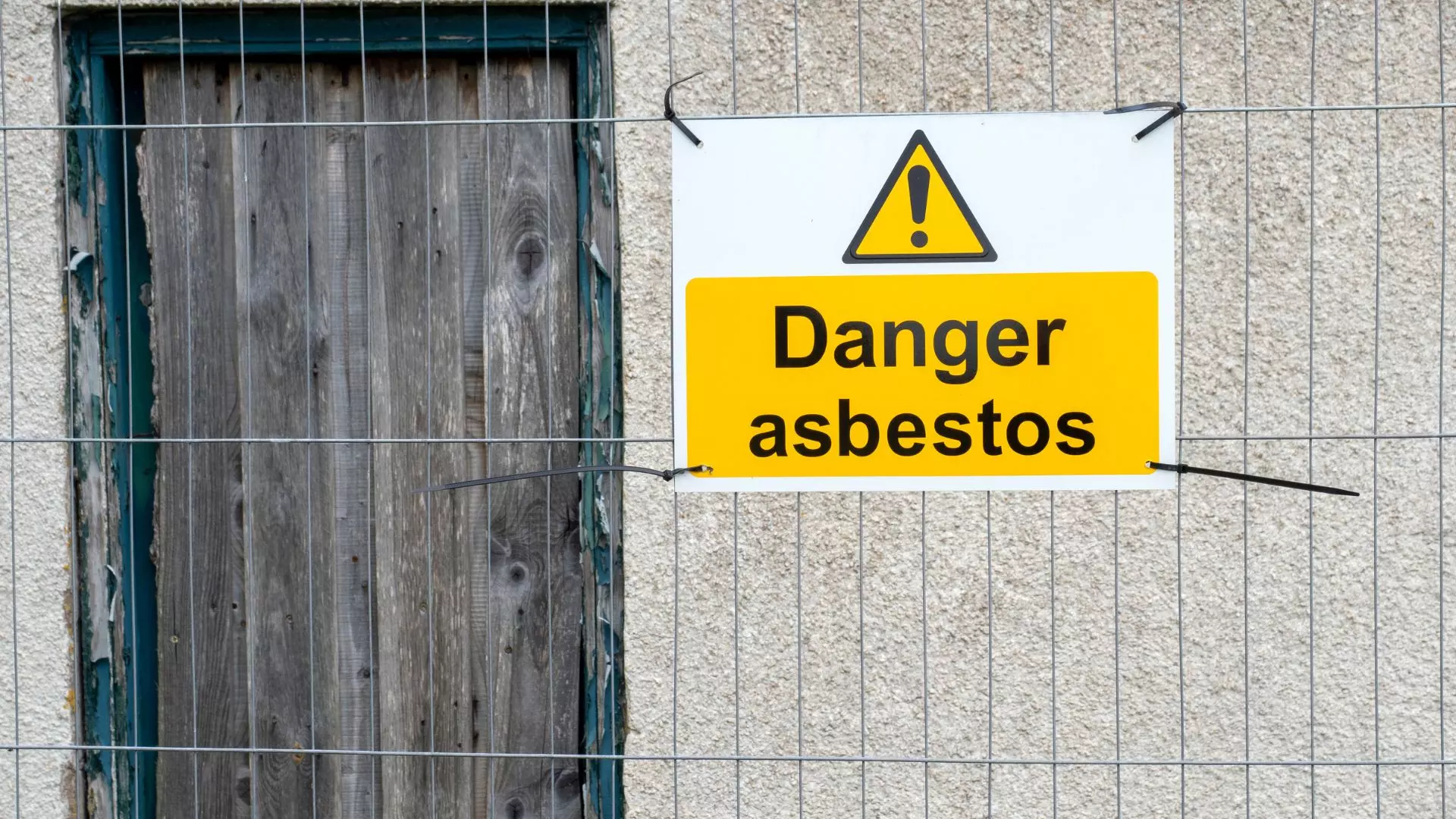
 Ask most people where they would expect to find asbestos in an older commercial building and the answer will probably be somewhere around the roof, pipes or old insulation. Those are accurate guesses, but it only covers some of the many possibilities. Asbestos was used in an enormous range of products, largely because it was strong, durable and resistant to heat and fire. As a result, it can turn up in some fairly unexpected places, including fire doors, fuse boards, gaskets, rope and even wallpaper. Bet you didn’t expect that!
For anyone responsible for an older commercial property, that’s important to know. The duty to manage asbestos isn’t just about knowing there might be asbestos somewhere in the building. You need to understand where it is, what condition it’s in and how it could be affected by maintenance or building work.
Where is asbestos commonly found in commercial buildings?
Asbestos was widely used in buildings constructed before the year 2000, so it’s particularly relevant when you’re dealing with older offices, industrial units, warehouses and other commercial premises. Some locations are a little more predictable than others…
Asbestos cement roofing and downpipes
Asbestos cement is probably one of the materials most people associate with asbestos in commercial buildings. It’s commonly found in roof sheets, wall panels, gutters and downpipes, particularly on older industrial units and warehouses. The asbestos is mixed into the cement, which makes it less likely to release fibres when the material is intact. That doesn’t mean it can be treated as harmless, though. Drilling, cutting, breaking or badly damaging asbestos cement can release fibres, so its condition needs to be considered as part of the overall management arrangements.
Insulation board is another fairly common find. Asbestos insulating board (AIB) was used in areas where fire resistance was needed and could be found in partitions, ceilings, soffits and other parts of a building.
Asbestos in plant rooms, fuse boards and fire doors
Older plant rooms are worth particular attention, as asbestos lagging was often used around pipework, boilers and other equipment because it was an effective insulator. Asbestos-containing gaskets and seals were also used around pipework and machinery. Asbestos could also be incorporated into older fuse boards and electrical equipment, often as insulation or heat-resistant components. It isn’t necessarily something you’ll spot just by opening a cupboard and having a look.
Fire doors are another good example of why asbestos isn’t always where you expect it to be. Some older fire doors contained asbestos insulating board within the core. From the outside, there may be nothing to suggest that the door contains asbestos at all.
The same applies to some older plant and machinery. It’s worth remembering that a building being constructed after 2000 doesn’t automatically mean everything inside it is asbestos-free. Older equipment may have been brought into the building from elsewhere and could still contain asbestos. Where machinery or other materials can’t be sampled, they may need to be recorded as presumed or strongly presumed asbestos until there is enough information to establish otherwise.
Rope and wallpaper
These are two of the areas where it blows people’s mind that asbestos could be found! Asbestos rope was used in certain applications where heat resistance was important, while asbestos-containing gaskets and textiles were used around machinery and equipment. There were also products such as asbestos wallpaper, where fire resistance was seen as an advantage.
It sounds strange now, but at the time asbestos was considered an extremely useful material. Its resistance to heat, fire and wear meant manufacturers found plenty of applications for it. That’s why trying to remember a list of places where asbestos might be found isn’t really a substitute for a survey. There are simply too many possible applications, and some of them aren’t obvious at all.
Why is an experienced asbestos surveyor needed?
Someone walking around an older building might look at a fire door, a piece of boarding or an old piece of equipment and see exactly that: a fire door, some boarding or a piece of equipment. But an experienced asbestos surveyor is looking at it differently. They’ll consider when the building was constructed, how it was built, what materials were commonly used at the time and whether something has characteristics that warrant further investigation. They also know the less obvious places where asbestos-containing materials can occur.
Where appropriate, samples can be taken and analysed to establish whether asbestos is present. Some materials can’t be sampled safely or practically, so they may instead need to be recorded as presumed or strongly presumed asbestos. That information is what allows a duty holder to maintain a useful asbestos register rather than simply having a document that says asbestos may be present somewhere in the building.
What are the risks of getting asbestos management wrong?
The obvious risk is the damage it can do to people’s health. Asbestos becomes dangerous when fibres are released into the air and inhaled. Once inside the body, those fibres can cause serious damage and are linked to diseases including asbestosis, lung cancer and mesothelioma. These conditions can take many years to develop following exposure.
There is also the question of legal responsibility. Under the Control of Asbestos Regulations 2012, the person with the duty to manage asbestos must take reasonable steps to find out whether asbestos is present, determine its condition and assess the risk it presents. Information about ACMs then needs to be recorded and kept up to date.
So, who is responsible for asbestos management?
The answer is the duty holder. This will generally be the person or organisation responsible for maintenance and repair of the premises. Depending on the property and the arrangements in place, that could be the building owner, landlord or managing agent. There can also be shared responsibilities where more than one party has control of a building.
And this isn’t limited to commercial premises either. The duty can also apply to common areas in residential properties, including HMOs and some rented buildings. If those responsibilities aren’t met, the HSE can take enforcement action and prosecute.
What should you do if you’re responsible for an older building?
If you manage a commercial building that was constructed before 2000, don’t assume you know where the asbestos is because you’ve seen an old roof or some lagging in the plant room. A suitable asbestos survey can identify materials that might otherwise be missed and provide the information needed to keep your asbestos register accurate. It can also help you understand which materials need to be managed, monitored or dealt with before maintenance and refurbishment work takes place.
The duty to manage asbestos isn’t about removing every ACM from a building. In many cases, asbestos can remain in place and be managed safely. However, it’s absolutely vital that you know where it is, what condition it’s in, and make sure that anyone who could disturb it has the right information before they start work.
Final thoughts
If you’re responsible for an older commercial property and you’re not completely sure what’s covered by your current asbestos information, that’s a good reason to review it. Our Asbestos Management Surveys can help provide a clearer picture of what’s in the building and what needs to happen next.
Get in touch with our team to discuss your needs and request a free, a no-obligation quote.
