
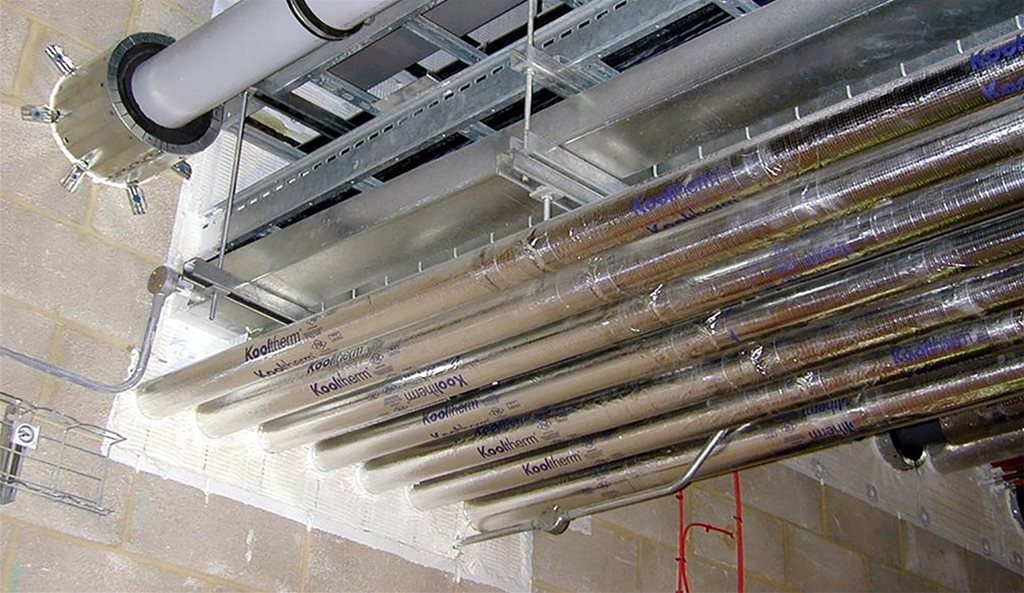
We all know the basics when it comes to fire safety in buildings. Things like alarms, extinguishers, and evacuation procedures are common knowledge. But did you know that some of the most important safety measures are the ones you never see? Passive fire protection is designed to contain fire and smoke within specific areas of a building, slowing its spread and protecting escape routes. At the heart of this system is fire stopping, and when it fails, the consequences can be severe.
For property owners, landlords, and building managers, understanding fire stopping is not just about compliance. It is about ensuring a building performs as intended when it is needed most. The challenge is that fire stopping failures are often completely hidden until a fire occurs.
What is fire stopping?
Fire stopping is a core part of passive fire protection and refers to the systems used to seal openings in fire-rated walls and floors. These openings are created whenever services such as electrical cables, pipework, or ventilation systems pass through a compartment wall or floor.
In simple terms, fire stopping restores the integrity of a barrier after it has been penetrated. Without it, a fire-rated wall is no longer fully fire-resistant. Fire stopping typically includes materials such as:
- Intumescent batt and mastic seals that expand under heat
- Fire-resistant mortars and sealants
- Collars around pipe penetrations
- Fire-rated boards and wraps
The purpose is simple: fire stopping helps maintain compartmentation by sealing gaps and service penetrations so fire and smoke cannot spread through walls, floors, ceilings, and concealed voids.
The challenge is that fire stopping is often hidden once installed. Unlike a fire alarm or sprinkler, its condition is not always visible during normal occupation. It can be damaged, disturbed, or removed during later works, particularly when new cables, pipes, or services are installed. Unless those changes are inspected and properly reinstated, the building may appear safe while an important line of defence has been weakened. That is why fire stopping is a frequent and serious risk in building safety management.
The role of compartmentation in life safety
To understand fire stopping, it is first essential to understand compartmentation. Compartmentation is the principle of dividing a building into fire-resistant sections, or “compartments”, using fire-rated walls and floors. These barriers are designed to hold back fire and smoke for a defined period, usually 30 or 60 minutes depending on the building design and fire resistance rating.
Compartmentation has two main purposes:
- It allows occupants time to evacuate safely
- It provides firefighters time to access and control the fire
Fire stopping is what maintains this system wherever services pass through fire-rated elements. When compartmentation is compromised, fire and smoke can move rapidly through a building. This often results in escape routes becoming unusable long before evacuation is complete, which is why intact fire barriers are critical to life safety.
The most common fire stopping defects
In practice, most fire stopping failures are not caused by deliberate neglect. They tend to occur gradually over time during routine maintenance, refurbishment, or service upgrades.
One of the most common issues is service installation work. In multi-occupied buildings, contractors frequently run new cables or pipework through existing risers and wall penetrations. Once the work is complete, the openings are often left unsealed.
This happens for several reasons:
- Contractors may not be responsible for fire stopping within their scope of work
- They may not have the correct certification or training
- The importance of reinstating fire barriers may not be communicated
- Responsibility for the building fabric is unclear between tenants and landlords
As a result, gaps are left behind within compartment walls and floors. Over time, these gaps accumulate, significantly weakening the building’s passive fire protection. This is particularly common in large office buildings with multiple tenants and frequent fit-outs or IT infrastructure changes. It is not unusual for risers and service voids to contain numerous unsealed penetrations that go unnoticed for years.
Another frequent issue is propped or poorly maintained fire doors. When fire doors are wedged open or damaged, they no longer provide the required separation between compartments, undermining the overall fire strategy of the building. What makes these issues particularly dangerous is that they are often treated as minor defects during day-to-day occupation. A damaged closer, missing seal, or routinely wedged-open door can easily become normalised, even though it may seriously reduce the effectiveness of the building’s fire protection in an emergency.
Which buildings are most at risk?
While fire stopping defects can occur in any building, certain types of property are more vulnerable. Older buildings that have been converted for new uses are particularly high risk. These properties often undergo multiple refurbishments over time, sometimes without full oversight of the original fire strategy or without consistent building control approval.
In some cases, buildings have been converted from commercial to residential use, or into care environments, without proper compartmentation upgrades. This can result in a complete absence of effective fire barriers between floors or sections.
A particularly serious example involves a Victorian property converted into a care setting. The building had multiple floors occupied by vulnerable residents, yet there was no effective compartmentation between levels. In the event of a fire, smoke and flames would travel rapidly through the structure, leaving occupants with very limited means of escape.
This type of scenario really shows the importance of ensuring that fire barriers are not only installed, but properly maintained and suitable for the building’s current use. Multi-occupied commercial buildings are also at high risk due to ongoing alterations and frequent tenant changes. Each change increases the likelihood of unsealed penetrations being left behind.
How fire stopping defects are identified
One of the challenges with fire stopping is that defects are not always visible during normal operation. There are no alarms or warning signs to indicate a problem. The primary method of identifying issues is through structured inspection.
During a fire risk assessment, assessors examine a sample of service risers and penetrations within fire-rated walls and floors. If defects are identified, this often triggers a more detailed, full-building fire stopping or compartmentation survey.
These inspections form part of a wider fire risk assessment process and are essential in identifying weaknesses in passive fire protection systems. Without this type of structured inspection, fire stopping failures can remain hidden indefinitely. Because these systems are passive, their condition and effectiveness are not always apparent during normal occupation. Damage, alteration, or missing protection may go unnoticed unless identified through inspection, testing records, and supporting documentation.
How often should fire stopping be inspected?
There is no strict legal timeframe that dictates how often fire stopping should be inspected. However, regular review is essential, particularly in buildings where alterations are frequent.
As a practical guideline:
- Multi-occupied or frequently altered buildings should be reviewed approximately every two years
- Smaller or low-change buildings may require less frequent inspection
- Fire risk assessments should always determine whether further investigation is needed
The main factor is change within the building. Every new installation of services, refurbishment, or layout change increases the risk of compromised fire stopping. Regular inspection ensures that issues are identified early, before they become embedded within the building fabric.
The regulatory framework
Under the Regulatory Reform (Fire Safety) Order 2005, building owners and responsible persons are required to ensure that fire safety systems are properly maintained. This includes both active systems (such as alarms and sprinklers) and passive systems, including fire stopping and compartmentation.
In practice, this means that fire stopping is not optional. It is a legal requirement that forms part of the overall duty to maintain a safe building environment. Failure to maintain these systems can result in enforcement action, increased liability, and, in the worst cases, prosecution following a fire incident.
What to do if issues are identified
When defects are identified through a fire stopping survey or fire risk assessment, it is important to act promptly and systematically.
The typical process is as follows:
- A structured survey is carried out and a report is produced
- The report identifies areas of non-compliance and recommended remedial works
- The report is passed to an accredited fire stopping contractor
- The contractor provides a quotation and scope of works
- Remedial works are completed using approved materials and methods
- Documentation is updated for compliance records
It is essential that remedial works are carried out by competent, third-party accredited installers. Fire stopping is a specialist trade, and incorrect installation can be as dangerous as no installation at all.
Can refurbishment work create fire safety issues?
Refurbishment and maintenance works are one of the most common causes of fire stopping failure. Any time a building is altered, whether through electrical upgrades, plumbing changes, or internal reconfiguration, there is a risk that fire barriers will be breached.
The issue is not the work itself, but what happens afterwards. If penetrations are not properly sealed, compartmentation is weakened without anyone necessarily being aware.
This is why understanding the building’s original fire strategy is so important. Without this knowledge, contractors may inadvertently compromise critical fire safety measures.
Before undertaking refurbishment works, property owners should ensure that fire stopping requirements are clearly defined and included within contractor responsibilities. For further guidance or to assess the condition of a building’s passive fire protection systems, a dedicated fire stopping survey is strongly recommended.
Practical fire safety steps for property owners
To manage risk effectively, property owners should take a proactive approach to passive fire protection:
- Ensure a fire stopping survey has been carried out within the last two years in multi-occupied buildings
- Require contractors to confirm in writing that fire stopping will be reinstated after any service installation
- Keep detailed records of all fire stopping works, including materials and contractors used
- Include fire stopping checks within routine fire risk assessment reviews
- Commission a survey before purchasing a commercial property as part of due diligence
Final thoughts
Fire stopping is one of the most important yet least visible components of passive fire protection. When it is in place and properly maintained, it plays a huge role in protecting lives and limiting fire spread. When it is compromised, the risk often goes unnoticed until it is too late.
For building owners and managers, the takeaway is very simple; fire stopping should never be assumed to be intact. It needs to be actively checked, documented, and maintained as part of a wider fire safety strategy.
RM Risk Management provides clear, practical fire stopping surveys and compartmentation surveys to help identify risks and ensure your building remains compliant. Get in touch for a free, no-obligation quote.
